





71-75 Shelton Street
Covent Garden, London,
WC2H 9JQ
Building AI capability rather than dependency means training a team to think with the tool: to brief it well, judge its output, and apply it to their own work without a supervisor. A Claude first approach concentrates that on one capable assistant used on real tasks, so the skill spreads across the team and outlives any single enthusiast or vendor. Dependency is what you get when one person can use AI and everyone else waits for them.
What is the difference between AI capability and AI dependency?
Capability is skill the business owns. People know what the tool is good at, where it goes wrong, when to trust it and when to check, and they apply it to their own work without asking permission each time. Dependency is the version most companies buy by accident: one keen person produces everything, or one vendor runs a black box, and the rest of the team cannot tell whether the output is right or wrong.
The difference shows up the moment that person is away. A capable team keeps working the new way. A dependent team quietly reverts to the old way until the enthusiast is back. The training you choose decides which of those you end up with, and most training, without meaning to, builds the second.
Why does most AI training fail to change how a team works?
Because it teaches the tool instead of the judgement. A demo of buttons and menus tells people what the software can do, then leaves the hard part, deciding whether to trust it on a real task, entirely to them. Most never cross that gap on their own, so the licence sits unused and the training is written off as a nice session that changed nothing.
The scale of that gap is now measured. McKinsey's 2025 report Superagency in the workplace found that while most organisations use generative AI, only 1% of leaders describe their rollouts as mature. And research from EdAssist by Bright Horizons in 2025 found 79% of workers feel unprepared to use AI at work. Access has run far ahead of capability. The tools are everywhere; the confidence to use them well is not.
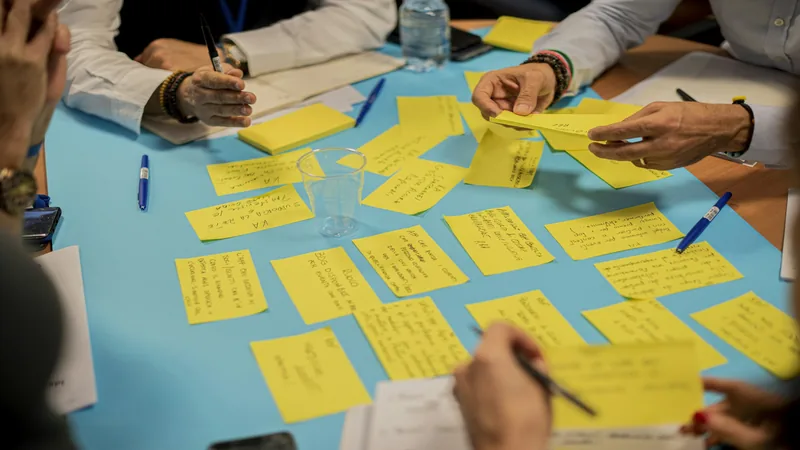
Training changes behaviour when it starts from the work, not the software. Take the jobs the team already does every week, the ones that eat skilled time, and work through them with the tool in the room. People leave with something that already works on their own tasks, not a certificate. The honest test is not who attended. It is whether Monday looks different.
What does a Claude first training approach mean?
It means teaching a team to get real value from one capable assistant applied to their own work, rather than spreading thin attention across a dozen half learned tools. People learn the skills that transfer: how to brief Claude so it understands the task, how to check what comes back, how to build a project that holds the context and instructions for a recurring job, and how to tell the tasks where it earns its place from the ones where it does not.
Standardising on one assistant is a deliberate choice, and it pays off twice. The skill becomes portable, because someone who can brief Claude for a proposal can brief it for a report, and a new joiner learns one system rather than five. And governance gets simpler, because there is one tool to secure and one place the work runs, which matters as the EU AI Act reaches full high risk enforcement on 2 August 2026. This does not lock you in. Specialist tools can sit on the same foundation later. It means the foundation is solid before you add to it. The wider sequence, from readiness through governed rollout, is set out in our practical 2026 framework for implementing AI in a B2B business.
Why train on one tool instead of many?
Because tool sprawl is where capability goes to die. Give a team ten AI tools and most people master none and cannot help each other, because everyone is somewhere different. The Microsoft and LinkedIn 2024 Work Trend Index found 78% of AI users bring their own tools to work, which is exactly the sprawl that leaves a business with quiet, private, unrepeatable use and no shared skill.
One well chosen assistant, learned properly, beats ten half understood ones. The team can compare notes, reuse each other's prompts and build a shared library because they all work in the same place. It is the same argument as rationalising an AI tool stack, applied to skills rather than software: fewer things, understood well, used by everyone.
What should AI training actually cover?
Four things, in order, and none of them is a feature tour.
Judgement first. When to use the tool and when not to, how to spot a confident wrong answer, what to check before anything leaves the building. This is the skill that separates capability from risk, and it is the part demos skip.
Then the real workflows. Not toy examples, but the team's own recurring jobs: first draft proposals, weekly reporting, meeting notes turned into actions, research pulled into a brief. People learn by doing their own work faster, which is also what makes it stick.
Then the shared assets. Prompts that work and projects that hold context, saved where the whole team can use them, so the second person to try a task starts from the first person's proven setup rather than a blank box. This turns one person's skill into the team's.
Then the guardrails. What not to put in, how client and commercial data is handled, where the line sits. Covered plainly, this is what lets you say yes to broad use instead of tolerating narrow, hidden use.
How do you make the skill stick after the training day?
Training day is the start, not the finish, and treating it as the finish is why so much of it evaporates. What holds the change is light and ongoing: a named owner who answers questions and curates the shared library, a habit of adding new proven prompts to it, and a short regular slot where people show a task they now do with the tool. The IDC skills research widely reported in 2024 put the potential cost of technology skills shortages to the global economy at up to 5.5 trillion dollars by 2026, which is the scale of the gap between owning the tools and knowing how to use them.
Ownership is the point that decides it. Where a business wants senior direction over all of this without a permanent hire, the fractional AI director model puts experienced leadership on the adoption itself, and training lands better as part of a proper rollout than as a standalone event. Getting the shared workspace right underneath it, covered in our companion piece on setting up Claude workspaces for teams, is what gives the training somewhere to live.
How should a B2B team start?
Pick one team and three jobs they do every week that are a poor use of skilled time. Train on those jobs, live, with the tool in the room, and send people away with prompts and projects that already work. Name an owner. Set up the shared library on day one. Then, a month later, look at whether those jobs are now done differently by default and whether use survives the owner taking a week off.
That is the whole test of capability against dependency, and it is a cheap one to run. Our AI training and enablement work is built around it, sitting alongside the rest of the AI Implementation Services so the skill is part of a governed rollout rather than a one off. Train for the team that keeps working the new way when nobody is watching. That is the only version worth paying for.
FAQ
What is the difference between AI capability and AI dependency?
Capability is skill the team owns: people understand what the tool does, when to trust it, when to check it, and how to apply it to their own work without supervision. Dependency is the opposite, where output only appears if one enthusiast is available or one vendor keeps the lights on, and the rest of the team cannot judge whether what comes back is any good. Training for capability spreads that judgement across the team. Training for dependency concentrates it in one place and calls the job done.
Why does most AI training fail to change how a team works?
Because it teaches features rather than judgement. A one hour demo of buttons and menus shows people what the tool can do, then leaves them to work out whether to trust it on their own tasks, which most never do. Training sticks when it starts from the jobs the team already does every week, works through those jobs live, and sends people away with prompts and projects that already work. The measure is not attendance. It is whether the work is done differently the following Monday.
What does a Claude first training approach mean?
It means training a team on one capable assistant, Claude, applied to their real work, rather than scattering attention across a dozen tools nobody masters. People learn to brief it well, to check its output, to build shared projects that hold context, and to know the tasks where it helps and the ones where it does not. Standardising on one assistant makes the skill transferable between people and the governance simpler, while keeping the option to add specialist tools later on the same foundation.
How do you measure whether AI training worked?
By change in the work, not by course completion. Useful measures are the number of people using the tool unprompted a month later, the recurring tasks now done with it by default, the hours it gives back on those tasks, and the size of the shared prompt and project library the team has built. If use depends on one person being in the room, the training built dependency. If the team keeps working the new way when that person is on holiday, it built capability.
