


.avif)


71-75 Shelton Street
Covent Garden, London,
WC2H 9JQ
A board does not reject sponsorship because it dislikes sport. It rejects a paper that cannot answer four questions: what number does this move, what does it cost in total, how will we know if it is working before the year is out, and when do we stop. Most sponsorship proposals answer the first well, the second partially, and the last two not at all. This is the structure of one that survives the room.
Section one: the commercial objective
State the objective in the currency your board already reports on. Pipeline, opportunities, closed revenue, cost per sales ready lead, retention in a named segment. One number, or at most two.
What not to write: awareness, brand equity, positioning. Not because those things do not matter, but because you cannot defend them at the six month review and you will be asked to. If awareness genuinely is the objective, you need a brand tracking measure in place before launch, which is a separate budget line and a separate conversation.
The test for this section is whether a director who has never read a sponsorship paper can say what changes if this works.
Section two: who it is aimed at
The named account list. Not a demographic, not a viewership figure.
For a B2B programme this is typically 200 to 2,000 accounts depending on deal size and market, agreed with sales leadership before the paper is written rather than after. Including it does two things: it makes the proposal measurable, and it converts sales leadership from spectators into co signatories, which matters more at the six month review than it does now.
If the audience section of your paper contains an impressions number, expect the finance director to circle it.
Section three: total programme cost
Total, not rights.
Published sponsorship prices are rights only. Industry guidance on activation is unambiguous: at least one pound of activation for every pound of rights fee, with current 2026 practitioner guidance closer to 1.5:1 or 2:1 once digital channels are counted. A rights fee presented without an activation figure is half a budget, and a board that approves it will be asked for the other half in March.
For a fully activated GT4 programme, the realistic 2027 band is 140,000 to 260,000 pounds per driver for a season, covering the racing and the agency work under one contract. Include internal time in your paper as a separate line even though nobody invoices for it, because it will be raised.
Set that against your existing event spend for comparison. Average exhibitor spend runs at roughly 24,000 dollars per show before internal time, lost sales capacity, pre show outbound and follow up, which typically take the real figure to 45,000 to 60,000 dollars. Six shows a year is the same order of money as a season long programme, and it is worth showing that side by side.
Section four: the measurement model
The section that decides whether the programme survives its first quarter. Four things belong here.
- One agreed definition of a sales ready lead, signed off by sales leadership before launch. Written down, with an owner.
- The attribution rule, locked in advance. Whether you count first touch, last touch or weighted matters far less than whether it was agreed before the results existed.
- The review points, with the proxy measure attached to each. Attention at same day, intent at three to seven days, qualification at fourteen to thirty days, revenue at sixty to one hundred and eighty days. State which of those you will make the keep or stop decision on, and state that it will not be revenue, because the lag from a first in person meeting to closed won revenue runs 60 to 180 days.
- The anti metric for each volume measure, so that a rise in lead volume with a fall in lead quality is caught rather than celebrated.
Plan the return at three to five times. That is the published benchmark for a well run B2B event sponsorship measured at 180 days, with best in class above seven times. Our own 2025 partner programme returned between 8:1 and 12:1, including 550,000 pounds closed and 2.7 million pounds of pipeline from 2,300 leads. We still design against three to five, because a paper built on a best case is a paper that reports failure in a normal year.
Section five: the funding route
If you sell through a channel, this section changes the size of the ask.
Marketing development funds and partner marketing budgets can carry a substantial share of a programme when it is structured by cycle rather than by asset, with each race weekend or content cycle built around one vendor, vertical or partner, each with its own campaign, audience and report.
State in the paper which vendors you have approached, what their fiscal calendars are, and what the base programme costs if none of them contribute. That last figure is the one the board actually needs, because a programme that only works with full partner funding is a programme with a single point of failure.
Section six: procurement
Short section, disproportionately useful.
A sponsorship contracted as a sports rights agreement creates a new vendor category most procurement teams have no template for, and a second supplier for activation. Two negotiations, two sets of terms, two organisations each pointing at the other when results are soft.
Contracting the whole thing as a marketing services engagement gives you one supplier, one statement of work covering both the property and its activation, and one accountable party for the spend and the pipeline it produced. Say so explicitly in the paper. It removes an objection before it is raised.
Section seven: risk and exit
The section most sponsorship proposals omit, and the one that most reliably gets a paper approved.
Name the risks honestly. Performance risk if the property underdelivers. Reputational risk and how it is handled. Key person risk. Concentration risk if too much of the year's event budget sits in one programme.
Then name the exit points. At the intent review, if these measures have not moved, this is what we change. At the six month review, if qualification has not moved, this is the point at which we stop and this is what it costs to stop.
A board approving a programme with named exit points is taking a smaller decision than a board approving an open ended commitment. Give them the smaller decision.
The six objections you should expect
- We tried sponsorship before and it did nothing. Ask what the activation budget was. It is almost always the answer.
- It is a lot of money for a logo. Agree, and redirect to the activation section. You are not proposing a logo.
- How do we know it worked? Section four exists for this.
- Our customers are not into motorsport. They do not have to be. The environment is the mechanism, not the message. The audience profile that matters is seniority and access, and for GT racing the audience skews 61% aged 38 and above, affluent and decision making.
- Can we do it for less? Yes, by cutting activation, which is the part that produces the return. Or by bringing partner funding in, which is section five.
- Why now? Section eight.
Section eight: why the decision cannot wait
Championship entries, livery and production schedules are committed months ahead of a season. Partner and vendor funding runs through MDF approval processes that take weeks and are allocated against fiscal calendars that turn in the autumn.
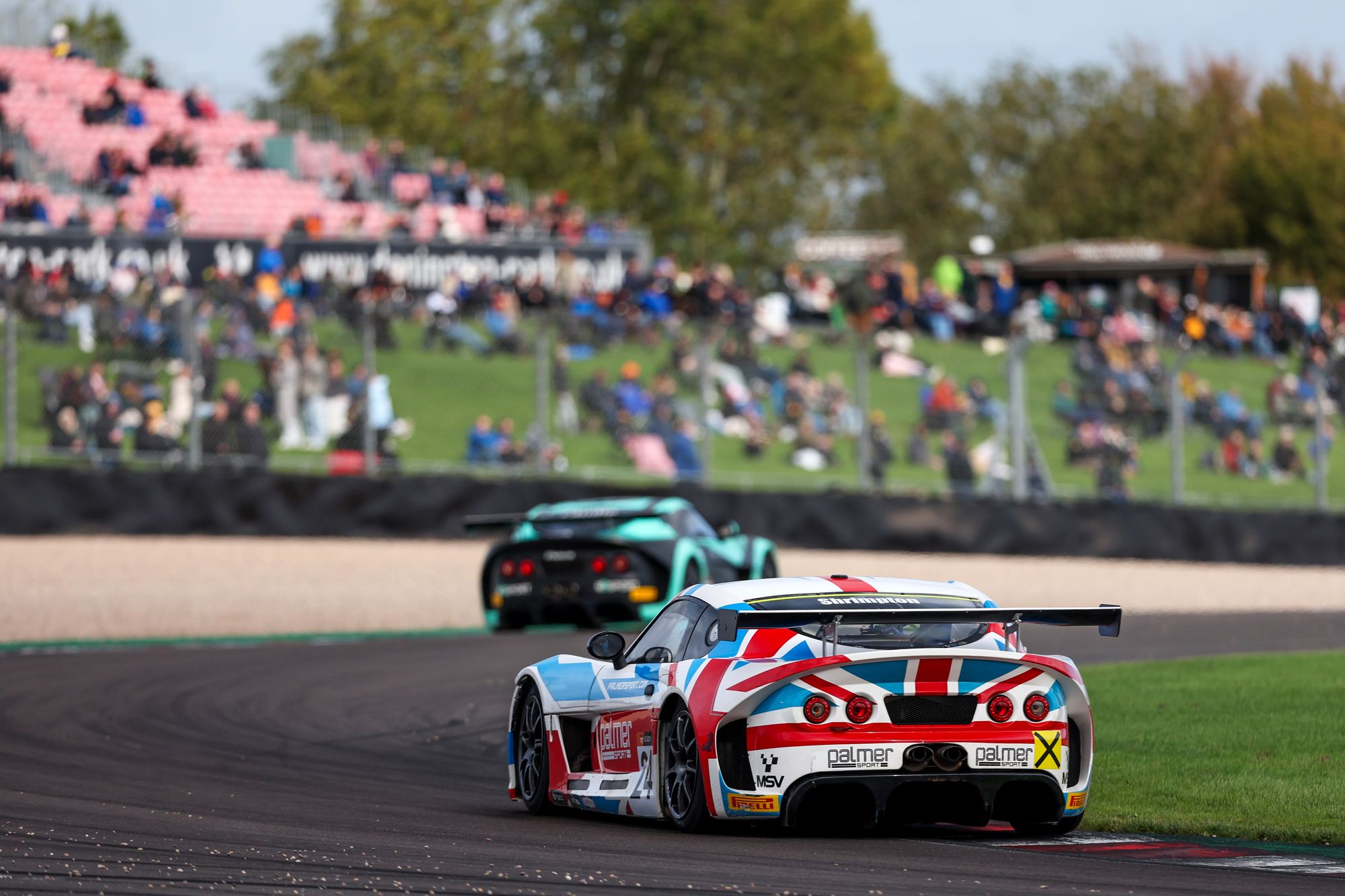
For our own 2027 programme with Shrimpton Racing the constraint is more specific. The programme is built around the first committed partner rather than assembled from a standing start, so the championship route, the markets and the calendar are shaped by whoever commits first. British GT for UK weighted pipeline, GT4 European Series for EMEA, or the Masters GT Revival for global high net worth deal making. That is a production reality rather than a sales tactic, and the effect on a late decision is the same either way: reduced choice, and a programme you join rather than one designed around your accounts.
A decision taken in autumn 2026 gets route choice, partner funding conversations inside the current fiscal year, and a full season. A decision taken in January 2027 gets what is left.
What to attach
Three appendices make a sponsorship paper substantially harder to defer: the named account list agreed with sales, the signed off definition of a sales ready lead, and a one page comparison of the programme against your current event spend on identical terms.
Write the paper, and let us supply the numbers
You now have the structure. The open question is what goes in section three, and who gives you figures a finance director cannot pick apart.
Teylu and Shrimpton Racing run the whole 2027 programme under one contract: the racing, the ABM engine on your named accounts, the content, the structured selling weekends and one pipeline dashboard. We will hand you the cost breakdown, the account list logic, the measurement model and the exit points in the format a board paper needs, before you ask anyone to approve anything. Our 2025 partner programme returned 8:1 to 12:1 across its partners.
Three championship routes are open. Autumn is the last point at which route choice and partner funding are both still available for a 2027 season.
See the full 2027 partnership outline
Or email Sam Shrimpton at sam.shrimpton@teyluandpartners.com for a twenty minute call. No pitch theatre. If it does not fit your business, we will tell you.
Frequently asked questions
What should a sponsorship business case include?
Seven sections: commercial objective in board currency, named account list, total programme cost including activation, measurement model with agreed definitions and review points, funding route, procurement route, and a risk section with named exit points.
How do you justify sponsorship to a finance director?
State the total cost including activation and internal time, state the planning return rather than the best case, state the review points and what happens at each, and name the exit. Finance objections are rarely about the amount, they are about open ended commitment.
When should a 2027 sponsorship decision be made?
Autumn 2026 for a spring 2027 start. Entries, livery and production are committed months ahead, and partner funding runs through MDF approvals allocated against fiscal calendars.
What return should a sponsorship business case be built against?
Three to five times on event sourced closed won revenue at 180 days, with best in class above seven times. Building against a best case is the commonest reason a normal year is judged a failure.
How should sponsorship be procured?
As a marketing services engagement rather than a sports rights agreement, wherever possible. One supplier, one statement of work covering property and activation, one accountable party.
