


.avif)


71-75 Shelton Street
Covent Garden, London,
WC2H 9JQ
Trade shows are not in decline. Exhibition industry revenue has recovered past pre pandemic levels, attendance sits at 98 to 104% of 2019 baselines, and exhibitions still take around 40.8% of exhibitor marketing spend. What has changed is who gets a return. Exhibitors who work the room actively report four to six times pipeline on total programme cost. Exhibitors relying on footfall, passive exposure and generic follow up report returns that keep flattening. The format is fine. The passive version of it is finished.
What does the 2026 data actually say?
It is worth separating the industry's health from your programme's health, because they are different questions and the sales pitch for exhibiting deliberately conflates them.
The industry is healthy. US exhibition industry revenue is above 16 billion dollars annually and show attendance has recovered to roughly 2019 levels. Exhibitions remain the largest single category in most B2B exhibitor budgets at 40.8% of marketing spend, according to CEIR's 2026 Marketing Spend Decision Report.
Your programme's health is a separate matter, and the honest reading of the same data is that returns have concentrated. Well run programmes report four to six times pipeline. Exhibitors depending on walk up traffic report declining returns year on year. The average across both looks stable. The distribution underneath it has stretched.
Average exhibitor spend runs at roughly 24,000 dollars per show. Attend six shows and you are at 144,000 dollars before anyone has left the office.
The four costs that never make the calculation
Most trade show ROI models are wrong in the same four ways, and all four understate the cost.
- Internal time. Four people for three days each, plus two days of travel and setup, is 20 working days. At a fully loaded cost, that is frequently larger than the stand.
- Lost sales capacity. Your best salespeople are the ones you send. They are also the ones not working live opportunities that week. Nobody puts this on the invoice and it is real money.
- Pre show outbound. Meetings booked in advance are where almost all trade show value sits. That booking work is a campaign, with a cost, and it is usually done by the same people who are about to lose three days.
- Follow up capacity. A badge scan is not a lead, and 400 of them arriving on a Monday morning is a workload, not an asset. If follow up takes three weeks, the meeting you had on the Tuesday is cold before anyone calls.
Add those four and a 24,000 dollar show is frequently a 45,000 to 60,000 dollar programme. Which is fine, if you measure it as one.
The structural problem no amount of budget fixes
Three days, and every competitor you have is in the same hall.
That is the part that cannot be optimised away. You can build a better stand, book more meetings and train your team harder, and you are still asking a buyer to distinguish between six similar propositions in an environment engineered for comparison shopping, while they are tired and someone is offering them a coffee twenty feet away.
For a business with a genuinely differentiated product this is survivable. For anyone in a crowded category, where the honest difference is service, partnership and the people, a trade show is close to the worst environment in which to make that case. Those things take longer than eleven minutes at a stand to demonstrate.
What a hosted environment does differently
The alternative is not to stop doing events. Events are where B2B pipeline comes from, and event influenced pipeline has held at 20 to 35% of enterprise B2B pipeline for three years. The alternative is to own more of the environment.
A hosted environment, whether that is a private customer day, an executive roundtable or a season long sponsorship programme, changes four variables at once.
- You choose who is in the room. Not who walked past. A named account list, invited deliberately, with your own customers present to do the talking. Research on B2B event formats consistently finds that sessions where existing customers speak outperform activations where vendor representatives pitch.
- There are no adjacent competitors. The buyer is not comparing you to five alternatives in the next aisle. They are forming a view of you on your own terms.
- You get more than a day. A season long programme gives you the same audience repeatedly across a year, which matters when the sales cycle runs 60 to 180 days and the decision needs several touches to move.
- You control the agenda. A structured weekend with a workshop, a filmed interview slot and a defined outcome per attendee is a different commercial instrument to a hospitality day. The workshop is the part most sponsors skip and the part that most reliably produces the follow up meeting.
The trade fair bridge
Here is the comparison we put in front of industrial and engineering clients, because it is the one that lands.
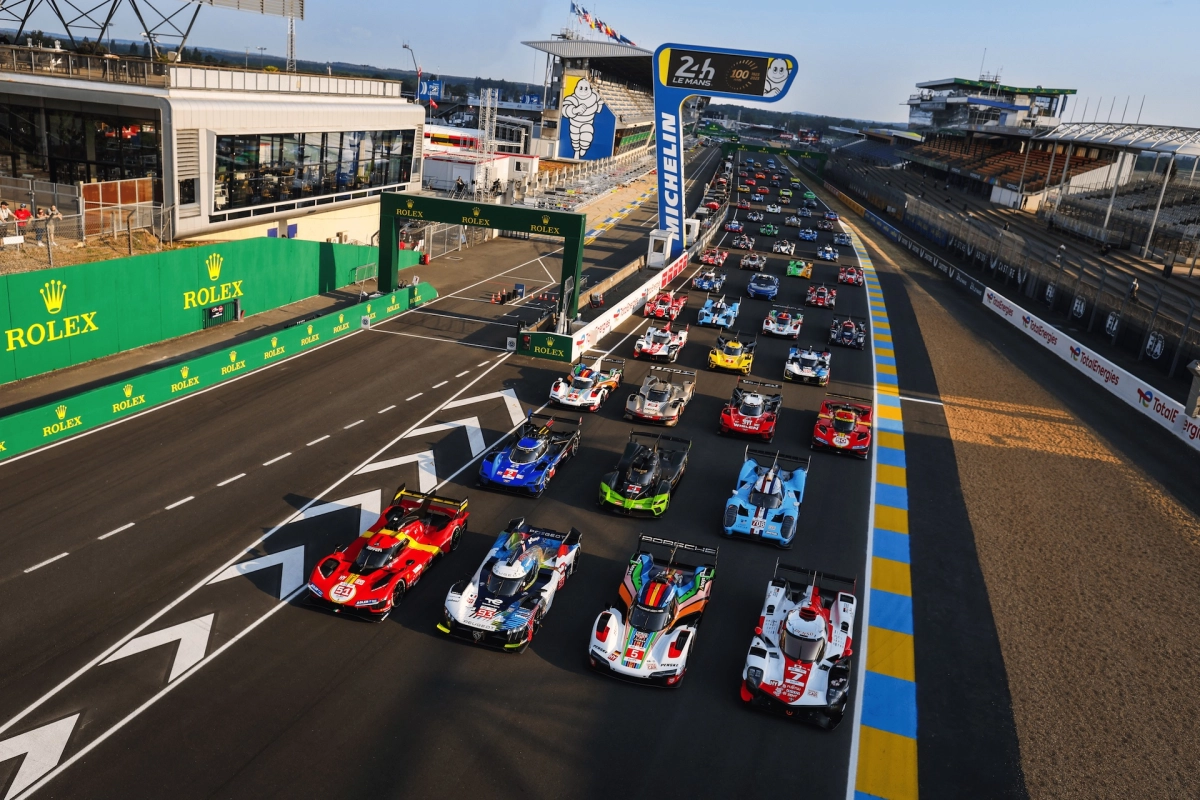
Your stand at the year's big show works for three days. A season long sponsorship gives you a hosted environment you effectively own across a whole year, in front of the same audience of engineers, buyers and plant decision makers, with your partners in the paddock and nobody else's, run by an agency that is already tracking your pipeline.
Our own format runs test day ride alongs and filmed customer interviews on the Friday, a working session with your customers on the Friday evening where we teach rather than pitch, and trackside selling with your sales team on the Saturday. Our event managers run all of it. That format produced 2.7 million pounds in deal pipeline for a Teylu client in 2025, from a programme that also delivered 550,000 pounds in closed revenue and 2,300 leads at a 10:1 return.
The content is the other half. Filmed customer testimonials and partner interviews shot at circuit, in an environment people actually want to be in, produce material your team uses for the following twelve months. Content produced around that programme ran at a 25.19% engagement rate against a motorsport industry average of 1 to 3%.
So do you cut trade shows?
Rarely, and not all of them.
The pattern among teams who have moved event spend from brand framing to pipeline framing is concentration rather than elimination. One documented shift went from twenty five sponsorships to seven, with the recovered budget put behind deeper activation at the remaining events.
That is the right instinct. Keep the two or three shows where your buyers genuinely are and where you can book meetings in advance. Drop the ones you attend because you always have, or because a competitor is there, or because a salesperson likes the city. Then take the recovered budget and put it into an environment you control for the rest of the year.
The test is simple. For each show on your 2027 calendar, ask how many meetings you booked in advance last year and how many opportunities closed from it inside 180 days. If you cannot answer either question, that is not an argument for attending again. It is an argument for measuring properly.
Move one show's budget into a room you control
You now have the test. The open question is which show on your 2027 calendar fails it, and where that money goes instead.
Teylu and Shrimpton Racing run a season long hosted platform for 2027: the racing, the ABM engine on your named accounts, the content, the structured selling weekends and one pipeline dashboard. One supplier, one statement of work, and no competitor stand in the next aisle. Our media work for HMS Networks returned 35:1.
Three championship routes are open across UK and EMEA. The first partner to commit picks the markets, and the calendar is built around them.
See the full 2027 partnership outline
Or email Sam Shrimpton at sam.shrimpton@teyluandpartners.com for a twenty minute call. No pitch theatre. If it does not fit your business, we will tell you.
Frequently asked questions
Are trade shows still worth it for B2B in 2026?
Yes, for exhibitors who work them actively. Exhibitions still take around 40.8% of exhibitor marketing spend and well run programmes report four to six times pipeline. Returns are flattening specifically for exhibitors relying on walk up traffic and generic follow up.
How much does it cost to exhibit at a trade show?
Average exhibitor spend runs at roughly 24,000 dollars per show. That excludes internal time, lost sales capacity, pre show outbound and follow up work, which together often take the real programme cost to 45,000 to 60,000 dollars.
What is a realistic trade show ROI benchmark?
Four to six times expected pipeline on total programme spend for a well run programme, driven by pre booked meetings rather than footfall.
What are the alternatives to exhibiting at trade shows?
Hosted environments you control: private customer events, executive roundtables, partner co hosted days and season long sponsorship programmes. None replace a large show for reach. All beat it on depth of conversation and on choosing who is in the room.
Should we cut trade shows entirely?
Rarely. Concentrate rather than eliminate. Keep the shows where your buyers genuinely are, drop the habitual ones, and move the recovered budget into an environment you control.
