


.avif)





71-75 Shelton Street
Covent Garden, London,
WC2H 9JQ
Studying brand strategy theory is useful. Studying brand strategy in the wild is more useful. The brands below have all made deliberate, defensible choices about who they are for, what they stand for, and how they show up. They did not get there by accident. None of them are Teylu clients (we name our own client work elsewhere on the site). All of them sit on the public record and reward close reading.
For each, three things. The move they made. Why it worked commercially. What your brand can steal, whether you sell direct to consumer or through partners and distributors.
If you want the underlying playbook these brands all use, read The Ultimate Guide to Building a Brand Strategy in 2026. If you want the short, opinion led version, How to Build a Brand Strategy: a founder's field guide is a faster read.

1. Patagonia, the brand that turned activism into a moat
The move. Patagonia made environmental activism inseparable from product. The "Don't Buy This Jacket" campaign in 2011 told customers to repair instead of replace. In 2022 the founder transferred ownership of the company to a trust whose purpose is to fight climate change. The activism is the product, and the product is the activism.
Why it works. Patagonia attracts customers who pay a premium because they want their consumption to mean something. The activism is also a recruiting magnet, a press magnet and a barrier to entry. Imitators look opportunistic. Patagonia looks consistent because they have been doing it for 50 years.
What to steal. If you have a real conviction, build the brand around it and price for it. The conviction has to be older than the marketing department, otherwise the market will spot it. For B2B brands, the equivalent is a category position your founder genuinely holds: a methodology, a manufacturing standard, an ethical line you will not cross.
2. Liquid Death, the brand that disrupted a category by treating it as a joke
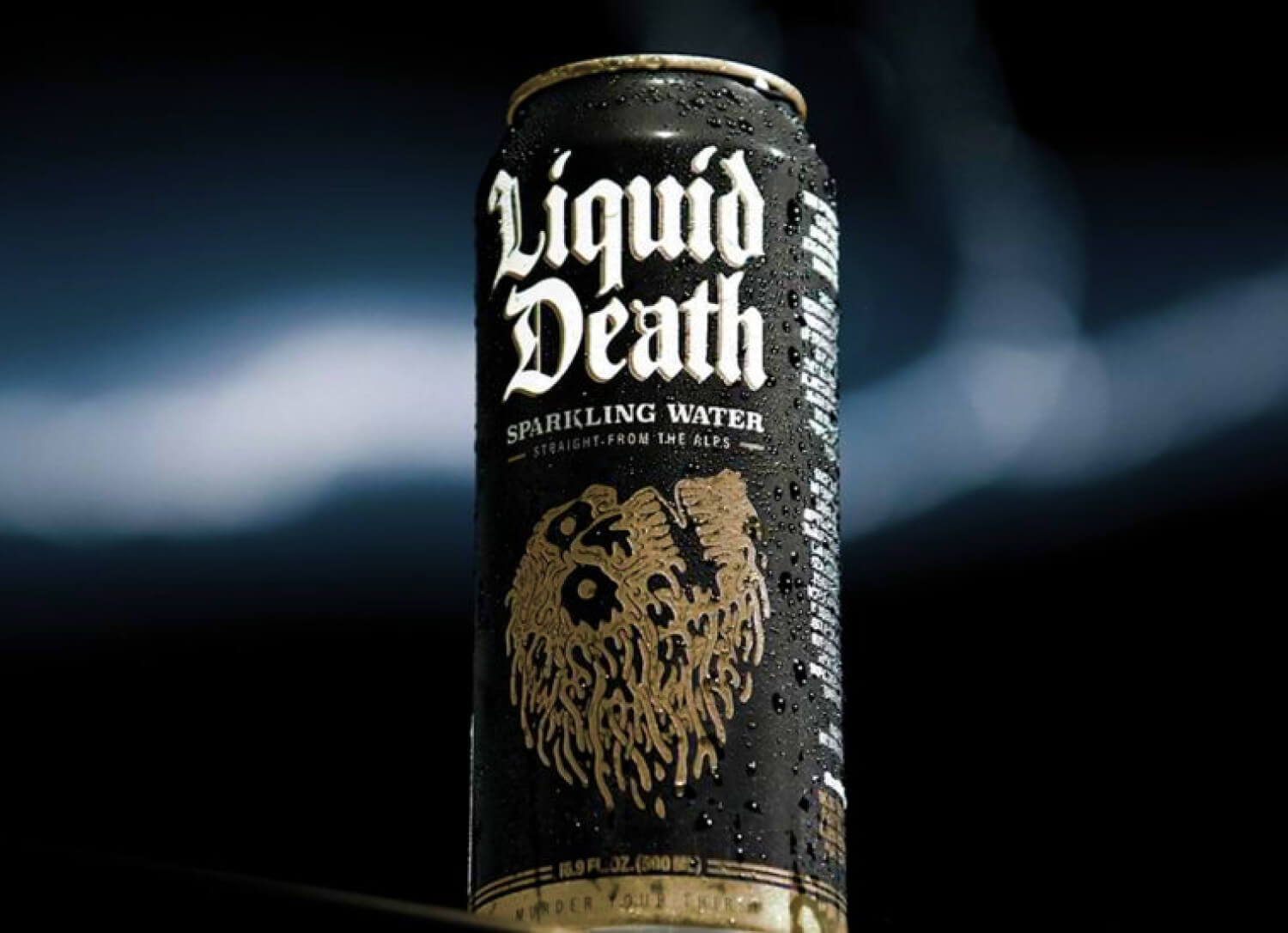
The move. Liquid Death sells canned water. They built a heavy metal aesthetic, ran horror film inspired ads ("Murder Your Thirst"), and treated a commodity product like a punk band. Three years in, they are valued at over $1 billion.
Why it works. Water is the most undifferentiated product on a supermarket shelf. Liquid Death created differentiation through identity, not through ingredients. The brand voice is so distinctive it acts as both packaging and media. Their content engine is built to be screen grabbed and shared. The product cost is low; the brand premium is high.
What to steal. If your category is generic, the differentiation has to come from voice and identity, not features. Be the brand that shows up like nothing else looks. If you sell through distributors, the visual loudness is also a sell through asset; it stops the eye in a crowded environment.

3. Oatly, the brand that made oat milk a personality
The move. Oatly stopped behaving like a beverage company and started behaving like a publication. The packaging is full of long, idiosyncratic copy. The ads are deliberately cheap looking. They picked a fight with the dairy lobby and refused to apologise. They made oat milk feel like a worldview.
Why it works. Oatly turned a category that should have been led by features (calcium fortified, low sugar, organic) into one led by personality. Customers self select. They are not buying oat milk. They are buying being the kind of person who buys Oatly. The category they helped create is now worth billions.
What to steal. Voice is a strategic asset. Most brands waste it. Pick a tone that the most boring competitor in your category cannot copy without it sounding ridiculous, and write everything in that tone, every time. For B2B brands, this looks like writing your white papers in plain English when everyone else hides behind acronyms.

4. Rapha, the brand that built a tribe around a sport
The move. Rapha sells expensive cycling kit. But the brand strategy is built around a tribe, not a product. They opened Clubhouses where members meet and ride. They publish a quarterly magazine. They run rides, race teams and travel programmes. The kit is a membership badge.
Why it works. Lifestyle brands earn permission to charge a premium because the customer wants to belong to the brand, not just buy it. Rapha's lifetime value per customer is many multiples of a typical sports apparel brand because the brand owns the social environment around the product.
What to steal. If your customer would identify themselves with your brand publicly, lean into the tribe. Build the meeting places, the rituals and the language. For B2B brands, the equivalent is the user community, the annual conference, the industry awards programme that you own and the rest of the category attends.
5. Allbirds, the brand that made "less" the headline
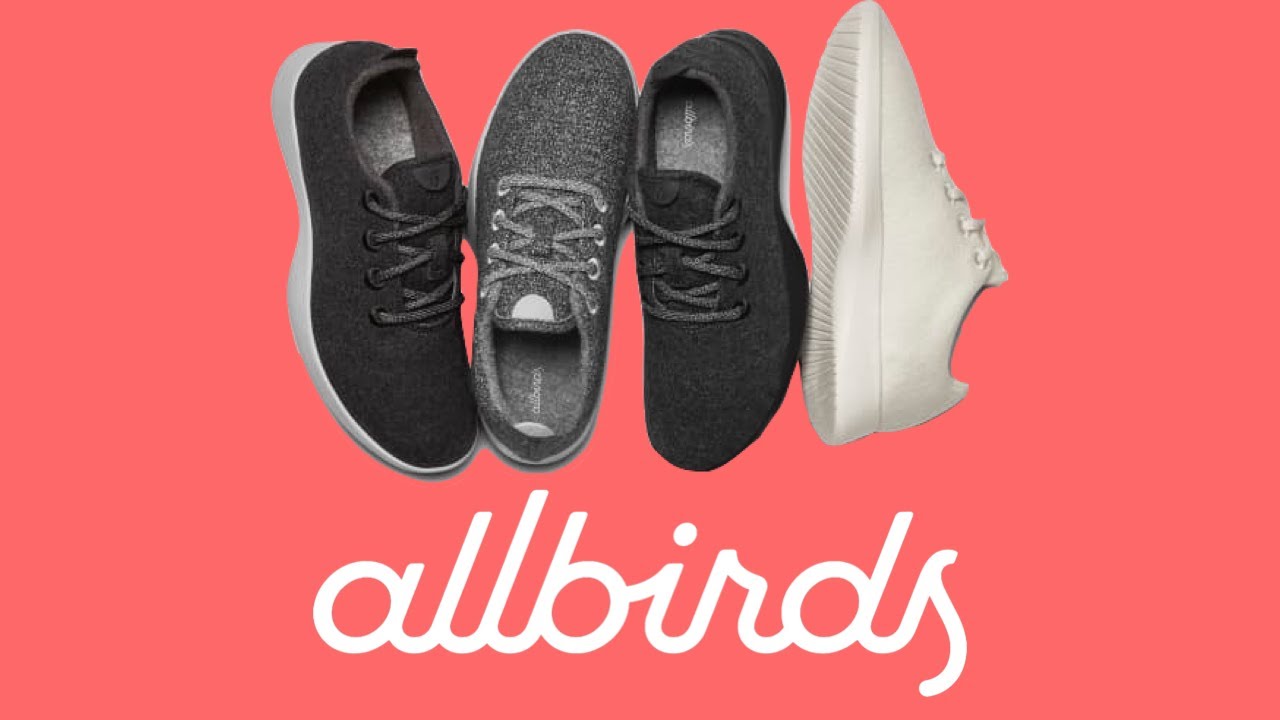
The move. Allbirds launched in 2016 with one product, one story (merino wool sneakers), and a website that refused to look like a sneaker website. No racing stripes. No celebrity endorsements. Just a small range, made from natural materials, told simply.
Why it works. In a category dominated by maximalism (Nike, Adidas, Puma), restraint became the differentiator. Allbirds attracted customers who were tired of the noise. They scaled to over $250 million in revenue inside five years on the back of a brand strategy whose central asset was simplicity.
What to steal. In a noisy category, restraint is a differentiator. Strip the website. Strip the messaging. Strip the range. The discipline is its own marketing. For founders running ranges that have crept upward over time, an "edit, do not extend" decision often unlocks more growth than a new product launch.

6. Aesop, the brand that made retail an extension of identity
The move. Aesop built one of the most recognisable beauty brands in the world without television advertising. Their stores are designed by different architects to fit the locality, no two are alike, and every one feels unmistakably Aesop. The product packaging is a single typeface on amber glass. Restraint applied at every touchpoint.
Why it works. Aesop weaponised retail as brand storytelling. Every store is a destination. Every product reads the same way wherever in the world you find it. The brand is so consistent across senses (smell, touch, design, copy) that the customer never wonders if they are in the right place.
What to steal. Pick the senses your category neglects and own them. For ecommerce brands, the equivalent is unboxing, post purchase email, and the touch and weight of the product. For B2B, it is the welcome pack, the office reception, the pre meeting brief. The senses your competitors ignore are the ones your customers will remember.

7. Tony's Chocolonely, the brand that made its mission its product
The move. Tony's Chocolonely sells chocolate built around a mission to end exploitation in cocoa supply chains. The chocolate bars are deliberately divided into unequal pieces to symbolise inequality in the industry. The packaging tells the story on every wrapper. Their open chain model invites competitors to copy them.
Why it works. The mission is so concrete (end illegal labour in cocoa) that customers can describe it in a sentence. The product is an artefact of the mission, not the other way around. They sell at premium pricing in the most price competitive aisle in any supermarket.
What to steal. If your mission is concrete, name it on the product. Vague missions repel. Specific missions attract. For B2B brands, the equivalent is publishing your standards openly, naming the customers you helped, and welcoming scrutiny. Transparency is a moat in industries that hide behind contracts.
8. Notion, the brand that grew through its users not its marketing
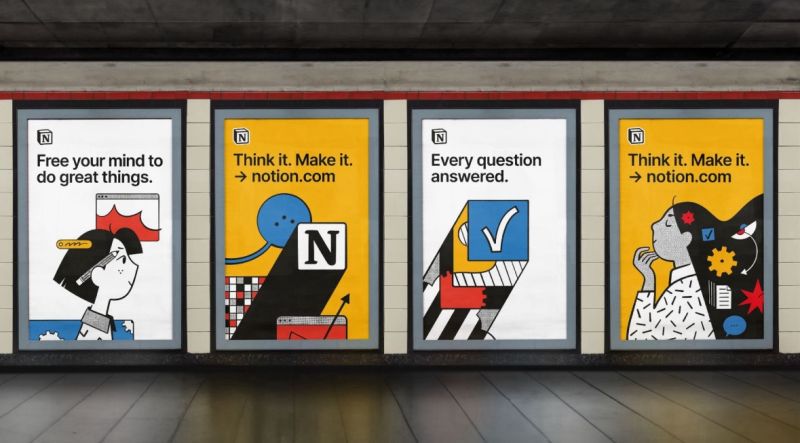
The move. Notion built a productivity tool, then handed creative power to its users. Templates, embeds, custom databases, a public gallery of community made workspaces. The users became the marketing. Notion ambassadors run YouTube channels with millions of subscribers, all teaching other people how to use the product.
Why it works. The brand strategy treated customers as collaborators, not audiences. The product itself is the marketing engine because every public Notion page is a billboard. The brand earned permission to charge premium tiers because the community grew the surface area faster than any agency could have.
What to steal. If your product can be made shareable, design the brand strategy around the share. For B2B brands, the equivalent is open templates, public benchmarks, free tools that put your logo into other people's workflows. The brand becomes more powerful the more your customers use it.

9. Glossier, the brand that made the customer the channel
The move. Glossier launched out of a beauty blog (Into The Gloss). The brand kept its customer at the centre of every creative decision. Product ideas came from comment threads. The packaging was designed to photograph well on Instagram. The brand voice was the same as the founder's voice.
Why it works. Glossier turned customers into both R&D and media. By treating the audience as the source of authority, the brand earned the right to charge premium and to launch new products with built in distribution. They reached unicorn valuation by 2019 with a marketing spend most of their competitors would consider a rounding error.
What to steal. Build the brand with your customer in the room. Read the reviews. Read the DMs. Read the support tickets. The most insightful brand briefs we have ever written started with a stack of customer service transcripts. For B2B brands, the equivalent is the customer advisory board that genuinely shapes the roadmap, not the one that signs off it.
.jpg)
10. Yeti, the brand that turned a cooler into a story
The move. Yeti sells expensive coolers. They built the brand by sponsoring fishing guides, bull riders and hunting outfitters, and then by producing short documentary films about those people. The films are not ads. They are 12 minute portraits, posted to YouTube, with the product almost invisible.
Why it works. Yeti customers buy a cooler the same way someone buys a watch: as a credibility object. The brand strategy understood that the product is functional but the purchase decision is identity driven. By telling other people's stories well, Yeti earned permission to charge five times the category average.
What to steal. If your product can become an identity object, invest in storytelling about your customers, not yourself. Branded content beats branded ads when the genre is right. For B2B brands, the equivalent is publishing your customers' work, your customers' results, your customers' opinions, with your brand as the patron rather than the protagonist.
What runs through all 10
A few patterns are worth pulling out, because they are the patterns that will repeat in any brand strategy worth its budget.
Specificity beats breadth. Every one of these brands could describe their inner circle customer in a paragraph. None of them tried to be for everyone.
Voice is treated as strategic, not stylistic. The voice is part of the moat. The most successful brands in the list invest more in tone and language than the average brand invests in design.
Conviction sits underneath the marketing. The brands feel like they meant it before they sold it. The customer can sense the difference between a position the founder believes and a position the marketing department invented.
Consistency over decades, not weeks. The reason you have heard of these brands is that they made the same big move again and again until the market remembered them for it. Most brand strategies fail not because the strategy was wrong but because the brand changed it before the market had finished noticing it.
Commercial wiring is explicit. Each one of these brands can show how the brand strategy moves revenue. None of them treat brand as a department separate from sales.
We see the same principles working with our own clients. Blake Mill have built a recognisable shirt brand by being uncompromising on their pattern point of view. Timberplay have spent two decades being the European authority on robust play equipment, and the brand reads as that authority on every page. HMS Networks have grown a global B2B presence by saying one thing about industrial connectivity and saying it consistently for years. Different sectors, same principles.
How to read these examples without copying them
The trap with brand strategy examples is to copy the surface and miss the system. Liquid Death is not a heavy metal aesthetic. It is a deliberate choice to treat a generic product as an identity object. Patagonia is not "be a green brand". It is a 50 year refusal to separate activism from product. Strip the surface, look at the system, then build a system that fits your wedge, not theirs.
Use the examples as proof points for your team that brand strategy can move commercial outcomes, then go back to the work. The work is the same as it has always been: who are you for, what do you stand for, what proof can you point to, and how will you keep showing up. Run that work properly through the steps in the pillar guide or the field guide version and you will have a brand strategy your CFO will sign off on.
If you want a thinking partner to help you do that work, that is the day job at Teylu. Our marketing strategy and delivery service sits founders alongside senior strategists who have built brand strategies for businesses at every stage from £1m turnover to £1bn. No layers. No retainers you cannot exit. The work that earns its keep.
You can also see how brand investment compounds with conversion when we walk through it in Invisible is not exclusive: why luxury brands cannot afford to ignore performance marketing.
FAQ
What makes a brand strategy "good"?
A good brand strategy is specific, defendable and commercially wired. Specific in who it serves and what it stands for. Defendable because the brand can prove its claims today. Commercially wired because every part of it is doing measurable work somewhere in the funnel.
How much does a brand strategy cost?
For most challenger brands, a properly scoped brand strategy lands between £15,000 and £75,000, depending on whether identity work is included and how many stakeholders need to be aligned. Cheaper than that usually means you are renting decoration. Much more expensive than that usually means you are paying for layers, not strategists.
How long does a brand strategy take?
Six to twelve weeks for a focused engagement. Longer for businesses with more stakeholders or more product lines. Shorter than six weeks usually skips the diagnosis, which is the part of the work that does the heavy lifting.
What is the difference between a brand and a brand strategy?
The brand is the impression people hold of you. The brand strategy is the deliberate plan for shaping that impression. The brand exists whether you have a strategy or not. The strategy is how you stop the brand being whatever happens by accident.
Should B2B brands study consumer brand examples?
Yes. The B2B buyer is human and forms preferences the same way the consumer does. The most distinctive B2B brands of the last decade have all stolen techniques from consumer marketing and adapted them to longer sales cycles.
Can a brand strategy work without a big budget?
Yes. The brands above range from start ups with seed money to public companies. The constant is sharp thinking applied consistently. Budget accelerates the work. It does not replace it.
How do I know if my brand strategy is working?
Track four things. Branded search and recall. Traffic and engagement on brand led pages. Conversion rate and CAC. Repeat rate and lifetime value. If all four trend in the right direction over six months, the strategy is landing.
Read next
The Ultimate Guide to Building a Brand Strategy in 2026 How to Build a Brand Strategy: a founder's field guide Marketing strategy and delivery services at Teylu
