


.avif)


71-75 Shelton Street
Covent Garden, London,
WC2H 9JQ
Sports sponsorship works for B2B when it is bought as a demand generation programme and fails when it is bought as visibility. The difference is not the sport or the audience size. It is whether the sponsorship arrives with named target accounts, a content engine, structured selling environments and one agreed definition of a qualified lead. Bought that way it behaves like an event programme with a twelve month tail. Bought as a logo, it behaves like a donation.
Why does B2B sponsorship have such a poor reputation?
Ask a B2B finance director about sponsorship and you will usually get a story rather than a number. The story involves a box at a stadium, some clients who were already customers, and a line item that survived three years because nobody wanted the conversation about cancelling it.
That reputation is earned, but it is earned by how sponsorship is sold rather than by what sponsorship can do. The commercial model in most of the sponsorship industry is rights first. A property owns an audience, packages access to it, and sells that package. Activation, the work of turning access into commercial outcomes, is the buyer's problem. It is scoped later, budgeted separately, and often handed to whoever has capacity.
So the marketing director signs for the rights, then discovers the programme needs a content plan, a targeting plan, an events plan and a reporting model that nobody costed. What arrives on the board report twelve months later is a reach figure and some photographs. Reach figures do not appear on a pipeline report, which is why sponsorship is the first line cut when the numbers tighten.
The failure is structural, not creative. You bought half a programme.
What has actually changed in 2026?
Three things, and together they make the case worth reopening.
The first is that in person environments have become more valuable as digital top of funnel has become cheaper. Anyone can now produce a competent landing page, a competent nurture sequence and a competent set of ads in an afternoon. That is a good thing, and it means the scarce commodity in B2B has moved from production to trust. Environments where a buying committee spends six hours with your sales team have gone up in relative value precisely because everything digital has gone down in cost.
The second is that event influenced pipeline has held steady at 20 to 35% of enterprise B2B pipeline for three years running, according to Vendelux's 2026 event sponsorship analysis. That is not a rising trend, and it should not be sold as one. It is a stable, material share of pipeline that most businesses under invest in relative to its contribution.
The third is that account based marketing has stopped being a specialism. More than 70% of B2B marketers now run active ABM programmes. That matters for sponsorship because ABM supplies the missing half. Once you are already targeting a named account list, a sponsorship stops being an audience you rent and becomes a reason for the accounts you have already chosen to say yes to a meeting.
What does sponsorship do that a media plan cannot?
Four things, and it is worth being precise about them because everything else sponsorship offers can be bought more cheaply elsewhere.
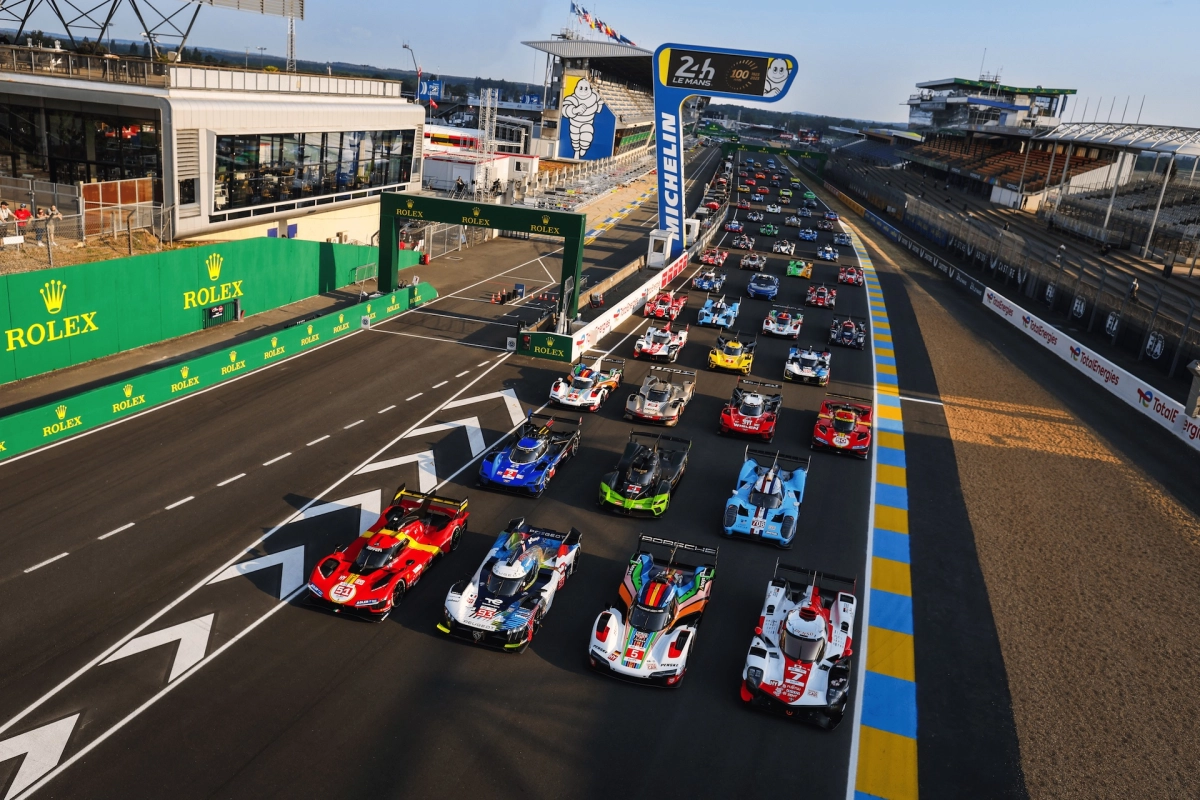
It creates a reason to make contact. The hardest problem in B2B outbound is not finding the account, it is having something to say that is not a pitch. An invitation to a race weekend, a test day or a filmed interview is a non commercial reason to open a conversation with a director who ignores every sequence you send.
It compresses the buying cycle into a room. Vendelux's benchmarking puts the lag from first in person meeting to closed won revenue at 60 to 180 days across most B2B segments. That is the lag after the meeting. The meeting itself replaces weeks of asynchronous evaluation, because a buying committee that spends a day with your technical people and your customers learns more than six months of nurture emails will teach them.
It produces content people choose to watch. This is the one most B2B businesses give up on. Industrial connectivity, cloud infrastructure and distribution software are difficult subjects to make watchable, and the honest result is that most B2B video is watched because someone was paid to watch it. Content built around a genuine story carries the technical message in a way a product film does not. That is the principle Teylu Studio works to around the racing: the story comes first and the technical message travels inside it.
It gives you an environment without competitors in it. Your stand at the big industry show works for three days and every rival is in the same hall, competing for the same footfall, with the same coffee. A season long sponsorship gives you a hosted environment you effectively own, with your partners in it and nobody else's. We look at that trade in detail in the trade show problem.
Why do most B2B sponsorship programmes fail?
Most failed programmes fail for one of these reasons, and all five are avoidable at the planning stage.
- No named accounts. The sponsorship is bought against a demographic rather than a list. Without a target account list, there is no way to know whether the right people saw anything, and no way to report on it afterwards.
- Activation treated as an afterthought. The rights cost is agreed, then the activation budget is whatever is left. A common industry rule of thumb is that activation should match or exceed the rights fee. If your activation budget is a tenth of your rights fee, you have bought a logo. What that does to a real budget is worth reading before you sign anything.
- No agreed definition of a qualified lead. Marketing counts badge scans, sales counts opportunities, and the programme is judged twice on two different numbers. This one sinks more programmes than any other and it costs nothing to fix.
- Measured on the wrong clock. Reviewed at 30 days, when the revenue lag is 60 to 180 days, every sponsorship in history looks like a failure. Here is the measurement model that fixes it.
- Hospitality without an agenda. A day out is not a sales environment. A structured weekend with a workshop, a filmed interview slot and a defined set of conversations for each attendee is a different thing, and it is the difference between hands shaken and meetings held.
What does a pipeline first sponsorship programme look like?
The structure matters more than the property. Whatever sport you choose, a programme built to produce pipeline has the same six parts.
- A named account list, agreed with sales before anything is signed, usually 200 to 2,000 accounts depending on deal size and market.
- A content engine that turns each event into assets within days rather than months. Our own rule is race weekend content live within seven days, because content that lands three weeks later has lost the news value that made it worth filming.
- An always on ABM and lead generation layer running between events, so the sponsorship is not four spikes a year with silence in between. The events give the campaign something to say. The campaign gives the events an audience.
- Structured selling environments with an agenda, a host, and a defined outcome per attendee. Our own format runs a test day and filmed interviews on the Friday, a working session with customers on the Friday evening, and trackside selling on the Saturday. The workshop is the part most sponsors skip and the part that most reliably produces the follow up meeting.
- One reporting model that unifies CRM, ad platform and event data, owned by you, refreshed weekly. Not three reports that disagree.
- A partner funding model, if you sell through a channel. This is the single biggest lever on affordability, and each race weekend or content cycle can be built around a different vendor, vertical or partner.
What return should you plan against?
Plan against three to five times. That is the published benchmark for a healthy B2B event sponsorship programme measured on event sourced closed won revenue at 180 days, with best in class programmes reported above seven times.
For context on what disciplined B2B demand generation can return, our work with HMS Networks delivered a 35:1 media return and cut cost per qualified lead from £760 to £72, and our Arrow ECS and VMware campaign reached 454,176 views at 42x. The event side of a sponsorship runs on the same model as our event and webinar marketing service.
We still plan new programmes against three to five times. A planning basis you can defend in a bad quarter is worth more than a best case you have to explain.
Is your business a fit?
Sponsorship is not universal, and it is worth being honest about who it does not suit.
It works when your average deal value is high enough that a handful of closed opportunities cover the programme, when you have a definable account list rather than an undefined market, and when you have a sales team capable of working a room rather than waiting for a form fill.
In practice that means mid sized B2B businesses and upwards, with deal values above roughly 25,000 pounds, in sectors where relationships carry weight: industrial and manufacturing, engineering, enterprise software, cyber security and technology distribution.
It does not work if you sell low value transactional products, if your target market is too broad to name, or if your sales team has no capacity to follow up inside a week. In those cases paid media will beat sponsorship on cost per opportunity every time, and we would tell you so.
Why should you decide on 2027 sponsorship now?
Two reasons, one general and one specific.
The general one is that sponsorship inventory is planned a long way ahead. Livery, production schedules and championship entries are committed months before a season starts, which means the businesses making 2027 decisions are doing it now, in the same budget cycle where they are also deciding their 2027 exhibition calendar. Deciding late does not get you a discount. It gets you what is left.
The specific one is that our own 2027 programme with Shrimpton Racing is built around the first committed partner rather than sold from a fixed template. The championship route, the markets, the calendar and the activation plan are shaped by whoever moves first, because they have to be. That is not a scarcity tactic, it is a production constraint, and it means the difference between an early conversation and a late one is the difference between a programme designed around your accounts and a programme you join.
How do you put this into your 2027 plan?
You now have the structure. The open question is whether championship winning motorsport is the vehicle you run it through.
Teylu and Shrimpton Racing run the whole thing end to end for 2027: the racing, the ABM engine on your named accounts, the content, the structured selling weekends and one pipeline dashboard. One supplier, one statement of work, measured against numbers your board already reports on.
Three championship routes are open, and the calendar is built around the first committed partner. Whoever moves first chooses the markets.
See the full 2027 partnership outline
Or email Sam Shrimpton at sam.shrimpton@teyluandpartners.com for a twenty minute call. No pitch theatre. If it does not fit your business, we will tell you.
Frequently asked questions
Does sports sponsorship actually work for B2B companies?
Yes, when it is bought as a demand generation programme rather than as visibility. Sponsorship that arrives with named target accounts, a content engine, structured selling environments and one agreed definition of a qualified lead behaves like an event programme with a twelve month tail. Sponsorship bought as a logo reliably underperforms because nothing converts the attention it buys.
What return should a B2B company expect from sports sponsorship?
Published benchmarks for well run B2B event sponsorship sit at three to five times return on event sourced closed won revenue measured at 180 days, with best in class programmes above seven times. Plan against three to five times. Anything promised above that without a visible attribution model behind it is a forecast, not a benchmark.
Why does B2B sponsorship so often get cut in a budget review?
Because it is reported in the wrong currency and measured on the wrong clock. It is sold on impressions and hospitality, neither of which appears on a board pipeline report, and it is often reviewed at 30 or 90 days when the lag from first in person meeting to closed won revenue runs 60 to 180 days.
Is sports sponsorship better than exhibiting at trade shows?
They do different jobs. A trade show puts you in front of a self selecting audience for three days alongside every competitor in your category. A sponsorship gives you a smaller audience across a whole season with no competitors in the room. Most B2B businesses do better keeping one or two shows and moving the rest into environments they control.
What size of B2B company is sports sponsorship suitable for?
Businesses with an average deal value high enough that a few closed opportunities cover the programme, a sales team able to work a room, and a named account list rather than a broad market. Typically that means deal values above roughly 25,000 pounds and a target list of 200 to 2,000 accounts.
